

Have you noticed more hair in the shower, a wider part, or a ponytail that does not feel as full as it used to?
First, take a breath. Hair loss is incredibly personal, but it is also incredibly common. And no, noticing thinning hair does not mean you did something wrong or that your beauty is disappearing. Your hair is only one part of you.
But I also understand that you want answers, not empty promises. So let’s talk honestly about alopecia, what microneedling may do for the scalp, what the clinical studies actually found, and how to approach dermarolling at home with patience and care.
What Does “Alopecia” Actually Mean?
Alopecia simply means hair loss. It is not one single condition, and this is important because different types of hair loss need different treatments.
- Androgenetic alopecia, also called male or female pattern hair loss, usually develops gradually. The part may widen, the temples may recede, or the hair may become finer as follicles slowly miniaturize.
- Alopecia areata is an autoimmune condition that often causes smooth, round patches of hair loss.
- Telogen effluvium is increased shedding that can happen after stress, illness, childbirth, rapid weight loss, surgery, nutritional deficiency, or hormonal changes.
- Scarring alopecia involves inflammation that damages and may permanently destroy hair follicles. Early medical care matters.
- Traction alopecia can develop when repeated tension from tight hairstyles pulls on the follicles.
This is why I never want you to look at every form of shedding and assume that a serum, supplement, or dermaroller is the answer. The research on microneedling is strongest for androgenetic alopecia, not for every type of hair loss.
If your hair loss is sudden, patchy, painful, itchy, scaly, or accompanied by redness, sores, eyebrow loss, or areas that look smooth and shiny, please see a board-certified dermatologist before trying microneedling. A dermatologist may also check for thyroid problems, iron deficiency, hormone changes, autoimmune disease, infection, or other underlying causes.
How Could Microneedling Support Hair Growth?
Microneedling uses very fine needles to create controlled microchannels in the scalp. These tiny, intentional punctures activate the skin’s natural repair response.
Researchers are still studying the exact mechanism, but proposed benefits include:
- Activating repair signals around the follicle. The wound-healing response may release growth factors and activate pathways involved in the hair cycle.
- Supporting scalp circulation. A healthy blood supply helps deliver oxygen and nutrients to living follicles.
- Improving hair density and diameter. Clinical trials have measured increases in hair count and shaft thickness, especially when microneedling was used with rosemary oil or minoxidil.
- Creating temporary microchannels. These channels can increase topical penetration, but more absorption is not automatically safer. Only use products that are safe to use after microneedling.
Microneedling cannot bring a follicle back after it has been permanently destroyed. What it may do is support follicles that are still alive but producing finer, weaker hair.
Hair growth is slow, so let’s set realistic expectations.
Thicker-looking hair can come from an increase in hair density, a larger hair-shaft diameter, or both. These are the outcomes most often measured in microneedling studies.
Longer hair requires time in the active growth phase and protection from excessive shedding and breakage. Microneedling does not make hair grow inches overnight. It may help create a healthier environment for growth, while gentle hair care helps the length you grow stay on your head.
Healthier-looking hair begins with the scalp, but it also depends on nutrition, hormones, stress, illness, styling habits, and the condition of the hair shaft. One tool cannot correct every cause.
That is the honest beauty of this approach: we are not forcing the body. We are giving it a controlled signal and then allowing time for its natural processes to respond.
What Do the Studies Say?
The results are encouraging, but most trials were performed in clinical settings and many combined microneedling with topical minoxidil. They do not prove that every home device, needle depth, schedule, or cosmetic serum will produce the same result.
A 2013 randomized study in men
In a 12-week study of 100 men with androgenetic alopecia, researchers compared 5% minoxidil alone with weekly microneedling plus 5% minoxidil. The average increase in the measured hair count was 91.4 hairs in the combination group versus 22.2 hairs in the minoxidil-only group. In the microneedling group, 82% of participants reported more than 50% improvement, compared with 4.5% in the minoxidil group.
A 2018 randomized study
Another trial found that microneedling plus 5% minoxidil produced a greater 12-week increase in hair count than minoxidil alone—approximately 12.8 versus 1.9 hairs in the measured area. The researchers were careful to note that, although the difference was statistically significant, the visible cosmetic improvement was modest.
A 2020 study comparing microneedling, minoxidil, and both
Sixty men were assigned to minoxidil alone, electrodynamic microneedling alone, or the combination. After 24 weeks, average hair-density improvement was 18.8 hairs/cm² with minoxidil, 23.4 hairs/cm² with microneedling, and 38.3 hairs/cm² with the combination.
A study comparing 0.6 mm and 1.2 mm depths
In a randomized trial of 60 people, both 0.6 mm and 1.2 mm microneedling were studied alongside minoxidil. The 0.6 mm group showed a significantly greater improvement in hair count and thickness than minoxidil alone, and it tended to perform better than the deeper 1.2 mm treatment.
This is a valuable reminder: deeper does not automatically mean better.
A 2022 study in women
Forty women with female pattern hair loss received either 2% minoxidil alone or weekly microneedling plus daily minoxidil for 24 weeks. The reported effective rate was 85% with the combined treatment and 45% with minoxidil alone, with only mild adverse reactions reported during the study.
What the larger body of evidence shows
A 2025 systematic review and meta-analysis evaluated 12 randomized controlled trials involving 631 patients with androgenetic alopecia. Overall, microneedling plus minoxidil improved hair count and hair diameter more than minoxidil alone. However, the hair-count studies varied substantially in their methods and results, which means there is still no single proven “perfect” needle depth, device, or schedule.
How to do Microneedling on Your Scalp at Home More Safely
1. Start with the right tool
For a gentle at-home routine, I recommend the Gin Amber Beauty 0.5mm REAL INDIVIDUAL NEEDLES® Dermaroller. It is also included in the The Hair Growth Kit which has everything you need, it pairs it with a Mini Natural Foam Cleanser for cleansing the tool and Hyaluronic Acid Serum to aid with hydration and healthy growth of hair.
Real individual needles are important. A roller made with stacked metal disks can drag or create wider, less controlled punctures. Sharp, individual needles are designed to enter the skin more cleanly.
2. Begin with a clean scalp and clean hands
Do not microneedle through dry shampoo, styling product, sweat, or oil buildup. Follow the device’s cleaning and sanitation instructions exactly, and never share your dermaroller with another person.
3. Part the hair into small sections
Work directly on the scalp rather than rolling over a thick layer of hair. Keep longer hair out of the roller’s path and use a gentle roll-and-lift motion to reduce tangling.
4. Use light, even pressure
More pain and more bleeding do not mean more growth. At home, the goal is a controlled, gentle treatment, not an injury. Stop if you experience sharp pain, significant bleeding, or skin tearing.
5. Do not overdo it
Follow the instructions supplied with your device. You should use the 0.5mm Dermaroller once a week, while observing how your own skin responds. The scalp needs recovery time; repeating treatment too soon may increase irritation and inflammation.
6. Be selective about aftercare
Freshly microneedled skin can absorb more of whatever you place on it. Avoid hair dye, essential oils, fragranced scalp products, exfoliating acids, retinoids, and other irritating formulas until the scalp has calmed.
If you use minoxidil or another hair-loss medication, do not assume it should be applied immediately after dermarolling. Clinical protocols vary, and increased absorption may also increase irritation or side effects. Follow your prescriber’s guidance and the medication label.
7. Keep your tool sharp
Needles dull with use. Replace the Gin Amber Beauty Dermaroller or its replaceable head after 10 uses. Never roll over open wounds, active infection, inflamed skin, or suspicious lesions.
8. Track progress monthly, not daily
Take photographs in the same lighting, from the same angle, with the same hairstyle. The clinical studies above lasted 12 to 24 weeks, and normal hair growth takes time. Consistency matters more than aggression.
Who Should Not Microneedle at Home?
Do not microneedle an actively infected, inflamed, sunburned, wounded scalp.
Speak with a medical professional first if you:
- have alopecia areata or any suspected scarring alopecia;
- have a bleeding disorder or take blood-thinning medication;
- tend to develop keloid scars;
- have impaired wound healing, uncontrolled diabetes, or a weakened immune system
Does Microneedling your Scalp for Hair Growth really work?
Hair loss can affect how you recognize yourself in the mirror. I know how tempting it is to try everything at once or to believe that the most painful treatment must be the most powerful. But all you need is consistency, the right tools, and a little bit of patience. Here are some of my clients who shared their hair growth progress with me 🥰
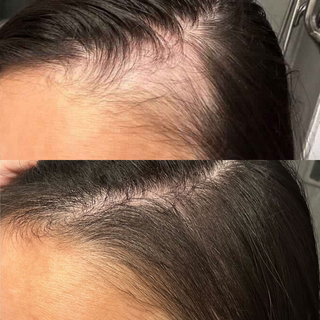
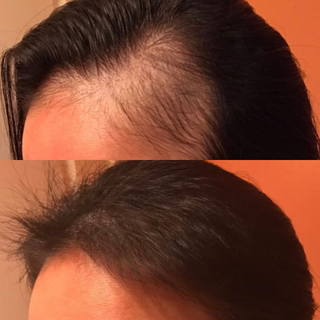
Find more before and after photos HERE. Healthy hair starts with a healthy scalp! Thank you for reading, till next time my Amber Babies! Please don't forget to subscribe and follow me on YouTube, Instagram, Facebook, and TikTok 🥳